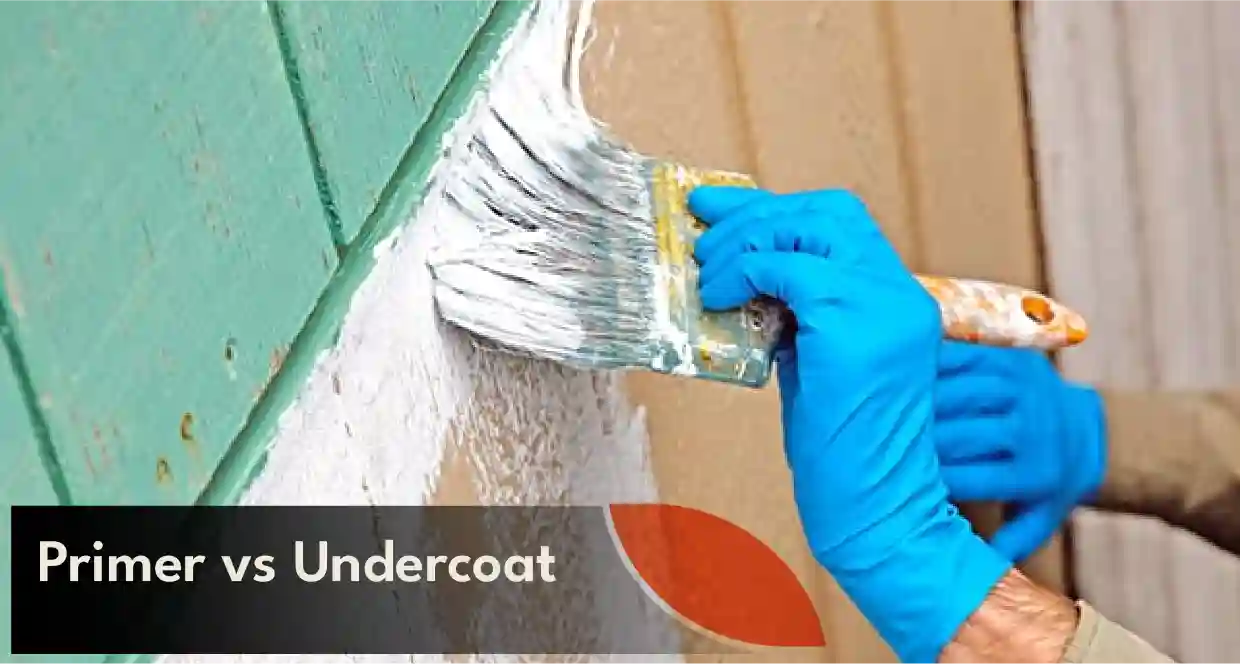
Primer goes on first on bare or problem surfaces, such as bare timber, bare metal, stains, tannin-rich timber or glossy old paint. It helps the paint grip and blocks stains, rust or moisture from coming through. A sealer is a type of primer for porous surfaces like new plasterboard, render, masonry and concrete, so the topcoat does not soak straight in. Undercoat sits between the primer or sealer and the topcoat. It builds an even base and helps hide a dark to light colour change. In Australia many products combine all three jobs. A primer sealer undercoat such as Dulux 1Step or Berger Premium Triple Prep handles new plasterboard and many common surfaces in one coat. Bare surfaces need primer or sealer. Big colour changes need undercoat. When in doubt, read the data sheet for your surface.
Table of Contents
- Primer vs Undercoat: The Short Answer
- What Is Primer?
- What Is Undercoat?
- Where Sealers and 3-in-1 Products Fit
- Primer vs Undercoat Side by Side
- When You Need Primer
- When You Need Undercoat
- Can You Skip Primer or Undercoat?
- Common Mistakes to Avoid
- Frequently Asked Questions
Primer vs Undercoat: The Short Answer
Primer grips bare or tricky surfaces and blocks problems from coming through. Undercoat creates a smooth, even base for the topcoat. They do different jobs. Sometimes you need both, sometimes a single combined product handles everything. The right choice depends on your surface.
What Is Primer?
Primer is the first coat on a bare or problem surface. Its main jobs are adhesion and blocking.
Adhesion: Primer bonds to surfaces that a topcoat would struggle to grip on its own. Bare metal, bare timber and glossy old paint all fall into this category.
Blocking: Primer stops stains, tannins, rust or moisture from bleeding through the topcoat. Without primer on tannin-rich timber like pine or cedar, the tannins leach through and discolour the finish.
Primers are surface-specific. A metal primer is different from a timber primer. Always choose the right primer for your substrate. For aluminium surfaces, our guide on how to paint aluminium window frames covers which primer to use.
What Is Undercoat?
Undercoat sits between the primer and the topcoat. Its job is to build a uniform base.
It fills minor imperfections, creates a consistent sheen level and improves topcoat coverage. Without an undercoat when going from dark to light, you may need extra topcoats to get proper coverage.
Undercoat does not block stains or bond to bare surfaces the way primer does. It needs a primer or sealer underneath it on any bare surface.
Where Sealers and 3-in-1 Products Fit
A sealer is a type of primer for porous surfaces. New plasterboard, fresh render, bare masonry and concrete all absorb paint quickly. Without sealing first, the topcoat soaks in unevenly and you get patchy coverage and a flat finish.
An acrylic sealer undercoat is often the only prep coat needed for new plasterboard.
Combo products, also called primer sealer undercoats, handle all three jobs at once. Products such as Dulux 1Step and Berger Premium Triple Prep are designed for this. They suit new plasterboard, light prep work and straightforward repaints. For trickier surfaces or significant colour changes, always check the data sheet before making a call.
Note that Prepcoat is a Haymes product name, so use the term prep coat when you mean the general type.
For primer and undercoat quantities, our guide on how much paint you need has you covered.
Primer vs Undercoat Side by Side
| Surface | What You Need |
| Bare timber | Primer, then undercoat if going light |
| Bare plasterboard | Acrylic sealer undercoat |
| Bare metal | Metal primer |
| Stained surface | Stain-blocking primer |
| Glossy old paint | Adhesion primer or light sand |
| Dark to light colour change | Primer or sealer, then undercoat |
| Repaint, same colour, good condition | Check the product data sheet |
When You Need Primer
Bare timber, plaster and metal
Any bare surface needs primer before a topcoat. Without it, paint has nothing to grip and the result is peeling or adhesion failure.
Bare timber needs a primer suited to the species. For high-tannin timbers like pine, a stain-blocking primer is essential. When painting kitchen cabinets, the primer step is critical for adhesion and durability. Our guide on how to paint kitchen cabinets covers this in detail.
Bare metal needs a metal primer to prevent rust and give the topcoat something to hold onto. For tile surfaces, our guide on how to paint tiles covers surface-specific prep advice.
Stains, glossy surfaces and repairs
Stain-blocking primer stops water marks, smoke, grease and tannin bleed from coming through. Skip it, and stains bleed back through no matter how many topcoats you apply.
Glossy old paint needs an adhesion primer or a light sand to give the new coat something to grip.
For repairs like filled holes and sanded patches, spot-prime before the full coat. Without it, you get flashing where repaired areas look different from the rest of the wall.
If your Melbourne home was built before 1970, there may be lead paint under later coats. Check our guide on lead paint in Melbourne homes before any sanding work.
When You Need Undercoat
You need undercoat when going from a dark colour to a much lighter one. It builds a neutral base so the topcoat covers in fewer coats and looks more even.
Undercoat also helps when the existing surface is uneven or when the topcoat benefits from a prepared base.
You do not need undercoat for a straight repaint in the same or a similar colour on a surface in good condition. Check whether the topcoat data sheet recommends a prep coat at all.
Can You Skip Primer or Undercoat?
For a repaint on a sound, clean, well-adhered surface in a similar colour, you can often go straight to the topcoat. Check the data sheet first.
You cannot safely skip primer on bare surfaces, stained surfaces or glossy old paint. Skipping it leads to adhesion failure, stain bleed or patchy coverage, all of which cost more to fix.
You can often skip the undercoat when using a primer sealer undercoat that covers all three jobs. Confirm this on the data sheet for your specific product.
Common Mistakes to Avoid
- Using an undercoat on bare metal instead of a metal primer. Undercoat does not stop rust.
- Skipping primer on tannin-rich timber. Tannins bleed through and discolour the finish even through multiple topcoats.
- Using a combo product on a surface it is not rated for. Always check the listed substrates on the data sheet.
- Applying topcoat over a sealer that has not dried properly. This causes lifting and poor adhesion.
- Not spot-priming repairs before the full coat. This leads to flashing that is hard to fix once the topcoat is on.
For surfaces like acrylic render, primer choices are specific to the product and render type. Our guide on acrylic render covers primers and topcoats for that surface.
Frequently Asked Questions
Can I use a primer instead of an undercoat?
Primer and undercoat do different jobs. Primer bonds to bare surfaces and blocks problems. Undercoat builds a uniform base for the topcoat. In some cases a combo product handles both. Check the data sheet for your surface.
Do I need both primer and undercoat on bare timber?
On bare timber, primer is essential. Undercoat is recommended when going from dark to light or when you want a smoother finish for the topcoat. For some surfaces and combo products, one coat handles both jobs. Always check the product data sheet.
Is a sealer the same as a primer?
A sealer is a type of primer. It is designed for porous surfaces to stop them absorbing the topcoat. They are not always interchangeable, so check which one your surface needs.
Do I need primer when painting over old paint?
If the old paint is in sound condition and you are painting a similar colour, often not. If the surface is glossy, stained, peeling or going from dark to light, then yes. Check the topcoat data sheet for guidance.
Can I use a 3-in-1 primer sealer undercoat for everything?
Not always. Combo products work well for new plasterboard and straightforward repaints. For bare metal, high-tannin timber or significant problem surfaces, you may need a dedicated primer. Always check the data sheet for the listed substrates before using a combo product.