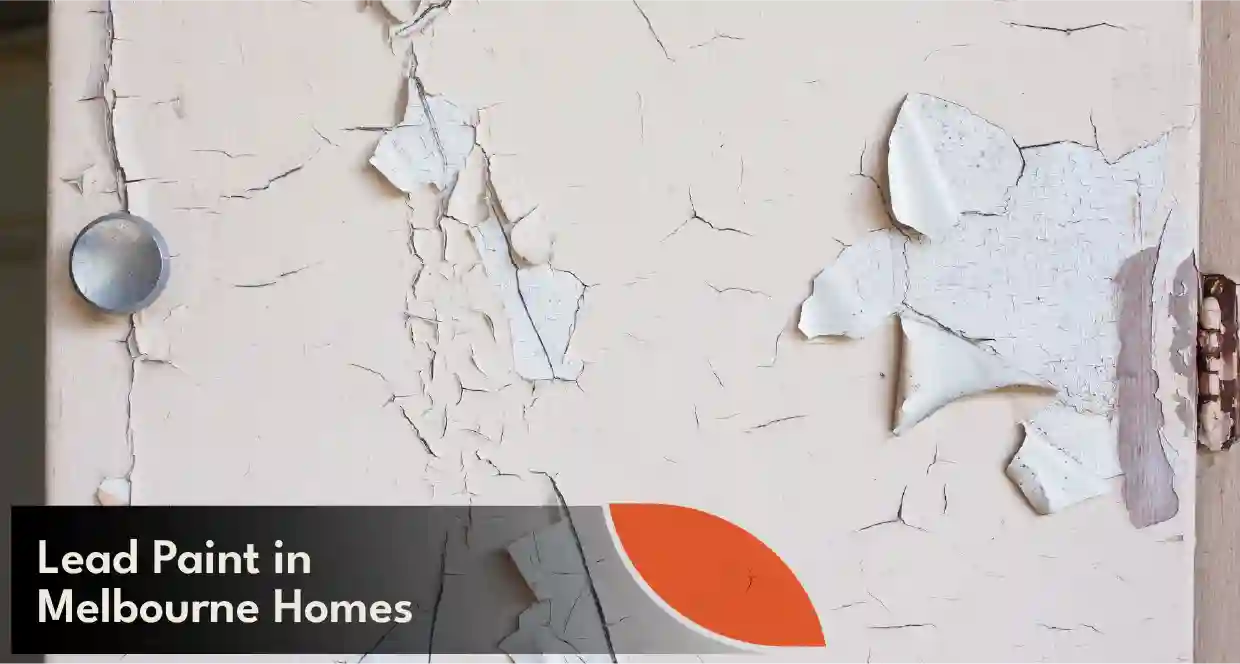
If your Melbourne home was built before 1970, there is a real chance the paint on your walls contains lead. This is not a reason to panic. But it is a reason to know the facts before you pick up a sander or hire someone to repaint.
Here is what you need to know.
What Lead Paint Is
Lead paint is paint that contains lead as an added ingredient. Lead was mixed into paint for decades because it made the finish harder, helped it dry faster, and made colours more vivid. It was used on homes, schools, factories, and fences across Australia.
The problem is that lead is toxic. When lead paint is in good condition and left undisturbed, it poses very little risk. The danger starts when that paint is scraped, sanded, or broken up. That creates lead dust, and lead dust is seriously harmful, especially for young children and pregnant women.
Which Melbourne Homes Have It
Homes built before 1970 are the most likely to contain lead paint. According to WorkSafe Victoria, paint with more than 1% lead by dry weight was widely used on buildings built before 1970, and paint on those buildings should be tested before any renovation or repainting work begins.
Australia did not phase out high-lead paint overnight. Limits were reduced over several decades. A national standard capping lead in paint at 0.1% was introduced in 1997. This means homes built between 1970 and the late 1990s may also have lead in older paint layers.
As a rough guide:
- Built before 1970: high likelihood of lead paint
- Built between 1970 and 1997: possible, especially in older layers
- Built after 1997: very unlikely
If your home falls into either of the first two categories and you are planning to renovate or repaint, test before you start.
Where It Is Usually Found
Lead paint was applied to all kinds of surfaces, but some areas were painted more heavily and more often. Common locations in older Melbourne homes include:
- Window frames and sills
- Door frames and architraves
- Skirting boards
- Verandahs and exterior trim
- Fences and gates
- Fascias and eaves
Exterior paint tends to have higher lead content because it needed to withstand the weather. Window frames and doors were repainted frequently over the years, so they can have several thick coats of old lead paint on top of each other. If you plan to sand or strip any of these areas, testing first is the smart move.
How to Tell If Your Paint Has Lead
There are two main ways to find out: home test kits and professional lab testing.
Home test kits
Lead paint test kits are available at Bunnings and other hardware stores. They use a chemical swab that changes colour when it contacts lead. They are cheap and give a quick result. But they have limits. They can miss lead in deeper layers if the top coat contains no lead. They also cannot tell you the exact lead content.
Lab testing
For a more accurate result, you can take a paint chip sample and send it to an accredited lab. This tells you the exact lead percentage and which layers are affected. Some professionals use an XRF device that scans the paint without removing any material and gives immediate results. If you are about to start a renovation on a pre-1970 home, lab or XRF testing is worth the cost upfront.
Why Sanding and Scraping Is the Danger
Lead paint that is in good condition and left alone is not an immediate health risk. The danger begins the moment that paint is disturbed.
Dry sanding creates very fine lead dust that floats in the air. It is easy to inhale or swallow without realising. Scraping and heat stripping can do the same. This dust settles on floors, benches, clothing, and hands. Children are at particular risk because they touch everything and put their hands in their mouths.
Even short exposure to lead dust can cause issues. In children, lead exposure can affect brain development. The effects do not show up right away, which makes lead dust easy to underestimate on a busy renovation site.
This is why how the work gets done matters just as much as what work gets done.
Your Options: Leave, Seal or Remove
Once you know lead paint is present, you have three practical options.
| Option | What it means | When to use it |
| Leave it | Do not touch it | Paint is intact, no work planned |
| Seal it | Paint over with a suitable topcoat | Paint is stable, you want a fresh look |
| Remove it | Strip using safe methods | Paint is peeling or major work is needed |
Painting over lead paint is a legitimate and widely used approach. A correct topcoat applied over stable lead paint seals it in and removes the exposure risk. This is often the most practical option for homes not undergoing major structural renovation.
Removal is sometimes necessary when paint is already peeling or flaking, or when renovation work requires stripping back to the substrate. Any removal must use proper containment to stop dust spreading through the home.
What Victorian Rules Say
WorkSafe Victoria has clear guidance on working with lead-based paint. The key points for Melbourne homeowners and tradespeople are:
- Buildings built before 1970 should be tested before any renovation or repainting work
- Disturbance of lead paint must be controlled to prevent dust exposure to workers and anyone nearby
- High-risk tasks like dry sanding, abrasive blasting, or scraping large areas require specific safety controls
There is no separate licence required for painters doing residential lead paint work in Victoria. But professional painters who use correct containment and wet methods are a much safer option than a DIY job. For large-scale removal, a specialist contractor is the recommended path.
The federal Lead Alert guide outlines six steps for safe renovation and is a useful resource for any homeowner planning work on an older property.
How We Paint Older Homes Safely
At NUW Painting, we work on Melbourne homes of all ages, including many period properties built before 1970. When we take on a job at an older home, we follow a clear process:
- We ask about the home’s age and check for signs of old or failing paint
- We recommend testing before work starts if lead paint is likely present
- We use wet sanding or low-dust methods wherever possible
- We contain the work area and dispose of waste correctly
- We avoid dry sanding or heat stripping on surfaces where lead is suspected
Getting surface prep right is what makes a paint job last. Doing it safely protects everyone in and around your home.
Frequently Asked Questions
When was lead paint banned in Australia?
A national standard limiting lead in paint to 0.1% by dry weight was introduced in 1997. Before that, higher limits applied. Before 1970, paint with lead content above 1% was common across Australian homes and commercial buildings.
How do I know if my paint has lead in it?
The age of your home is the biggest indicator. Homes built before 1970 carry the most risk. Test kits from hardware stores give a fast answer for surface layers. Lab testing or XRF scanning gives a more complete result when renovation work is planned.
Are lead paint test kits accurate?
They are a useful first step but not perfect. They can miss lead in deeper layers if the top coat contains none. For any serious renovation on a pre-1970 home, professional testing gives a more reliable result.
Can you paint over lead paint?
Yes, if the existing paint is stable and in good condition. Painting over it with a correct topcoat seals the lead in and is a safe, widely accepted approach. The surface must be prepared using wet methods, not dry sanding.
Is lead paint dangerous if it is not disturbed?
If the paint is intact and in good condition, the immediate risk is low. Risk rises when paint starts to peel or chip, or when it is sanded, scraped, or disturbed during renovation work.
Who removes lead paint in Melbourne?
Professional painters and specialist lead paint removal contractors both handle this work. For smaller jobs, an experienced painter using correct safety practices is usually sufficient. For large-scale removal, a specialist with proper containment equipment and waste disposal is the recommended option.
Painting an Older Melbourne Home?
If your home was built before 1970 and you are planning a repaint or renovation, talk to NUW Painting first. We work on period Melbourne homes regularly and know how to handle older paint safely and get a great result. Visit our services page or contact us to discuss your project.