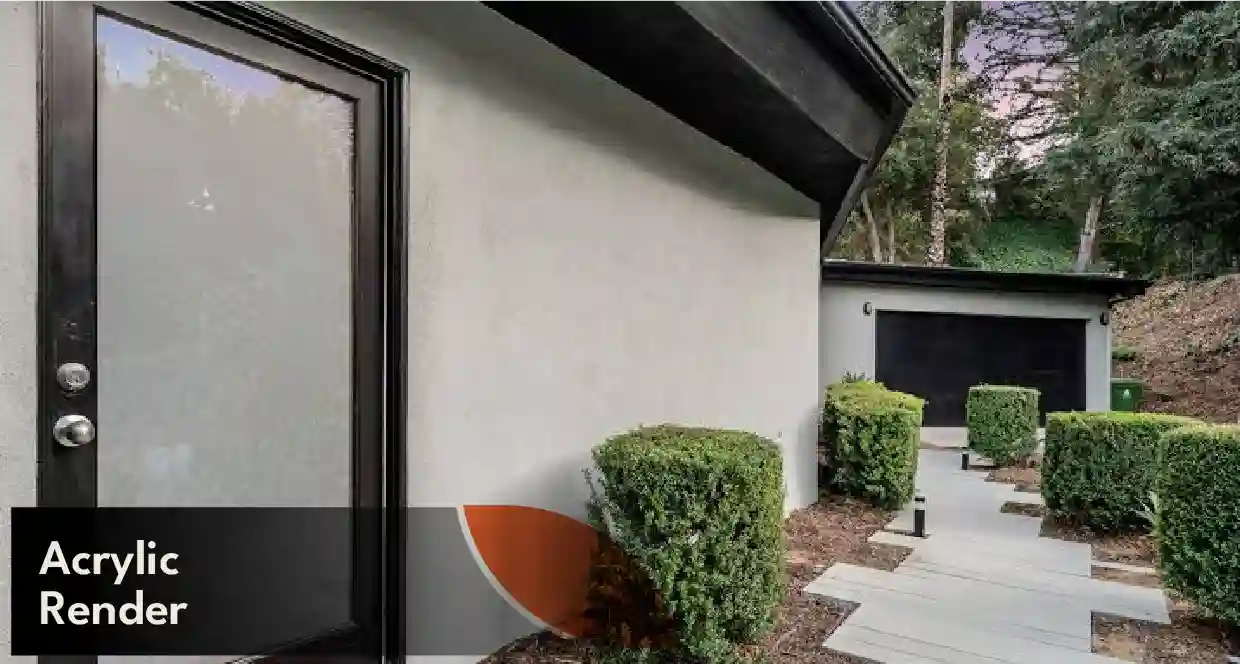
If you’re weighing up acrylic render for a Melbourne home, you’re probably trying to work out if it’s worth the extra cost over cement render, and whether you can paint it later. Acrylic render has become a popular choice for weatherboard and brick homes because it flexes with the building instead of cracking.
Let’s discuss what it is, how it compares to cement render, what it costs, and how to paint it properly once it’s cured.
What is acrylic render?
Acrylic render is a premixed coating that combines cement or polymer binders with acrylic resin. The acrylic gives the render a bit of stretch, so it copes better with small movements in the wall behind it. You’ll find it applied over brick, besser block, blueboard, polystyrene cladding and fibre cement sheeting.
How it is made and why it flexes
Most acrylic render products mix sand, pigment and an acrylic polymer binder rather than relying purely on cement and lime. That polymer content is what lets the render expand and contract slightly as temperatures shift. Traditional sand cement render doesn’t have this give, which is why it tends to crack first when a house settles.
Acrylic render vs cement render
Both do the same basic job. They protect the wall and give it a finished look. But they behave quite differently once applied.
Flexibility and cracking
Cement render is rigid. As the frame or slab moves, even slightly, cracks tend to show up along weak points. Acrylic render handles that movement better because of its polymer content, so it’s generally the safer pick for newer builds or homes on reactive soil.
Drying time and cost
Cement render usually needs several weeks to cure fully, often close to a month, before it’s ready for paint. Acrylic render dries much faster, and some systems can be painted within about a week, depending on the weather. That said, acrylic render costs more per square metre upfront, so the trade-off is speed and durability against a lower initial price.
Which suits which substrate
Acrylic render works well on fibre cement, blueboard and previously painted surfaces where cement render can struggle to bond. Cement render still makes sense on solid masonry like brick or besser block, especially on heritage homes where a traditional look matters.
The disadvantages of acrylic render
It’s not the right fit for everyone. A few things worth knowing before you commit.
- It costs more than cement render, sometimes noticeably so.
- It’s harder to patch invisibly. Repairs can leave a slightly different texture or sheen.
- It needs a compatible primer, so you can’t just paint over it with anything from the shed.
- On some substrates it needs a specific system from one manufacturer, which limits your options if you want to switch products halfway through a job.
None of these rule it out. They just mean it pays to plan the job properly rather than treat render as an afterthought.
What it costs in Melbourne
Costs vary a fair bit depending on substrate, texture and how much prep the walls need. As a rough guide, homeowners in Melbourne are typically looking at higher rates for acrylic render than for cement render, largely because of the material cost and the skill needed for a clean finish. Larger or heavily textured jobs, and homes needing extensive crack repair first, sit at the top end. Getting a couple of quotes from local applicators is the most reliable way to pin down a number for your specific house. If you’d like an accurate figure for your project, you can get a free quote from our team.
Texture finishes and how they change the look
Texture is where acrylic render really earns its reputation. You can go smooth and modern, or coarse and traditional, and the finish changes how light and shadow sit on the wall. Coarser textures hide minor imperfections well, while smooth finishes show every flaw, so they need cleaner prep work.
Colour matters just as much as texture. Popular exterior shades right now include Monument, Surfmist, Shale Grey and Woodland Grey, all of which read differently depending on the render’s texture. A smooth finish in Surfmist looks crisp and contemporary. The same colour in a coarse texture reads warmer and more textured. If you’re still deciding between shades, our guide on choosing an exterior colour covers how light and orientation affect the final look.
Painting over acrylic render
Render and paint are two separate jobs, even though they often get bundled together in conversation.
When you can paint it and when you must wait
New acrylic render usually needs a short curing period before paint goes on, often around a week, though this depends on the product and the weather. Painting too early traps moisture underneath the topcoat, which can cause bubbling or peeling later. Always check the manufacturer’s guide for the specific render used on your home.
Primers and topcoats that work
A masonry primer designed for render is worth using rather than skipping straight to exterior paint. It seals the surface and helps the topcoat bond evenly. From there, a quality exterior paint built for masonry will hold up against Melbourne’s mix of sun, wind and rain. This is the same approach we use across our exterior painting services, where surface prep gets as much attention as the paint itself.
Why hairline cracks come back
Even flexible render can develop fine hairline cracks over time, usually where the building naturally moves the most, like around windows or corners. Painting over a crack without filling it first just means the crack telegraphs through the new coat. A proper fix means raking out the crack, filling with a flexible filler, then priming before repainting.
Maintaining a rendered exterior
Rendered walls don’t need much, but a little upkeep goes a long way. A rinse down once or twice a year clears off dust, mould and salt buildup, which matters more if the home is near the coast. Keep an eye out for new cracks and deal with them early rather than letting moisture get behind the render. If you’re weighing up render against other exterior options, it’s worth comparing it to alternatives like limewash on brick, which suits older brick homes that weren’t built for a rendered look. For newer weatherboard homes, though, painting a weatherboard house is often a simpler and cheaper path than adding render at all.
Frequently asked questions (FAQs)
What are the disadvantages of acrylic render?
It costs more than cement render, patch repairs can be visible, and it usually needs a specific primer and topcoat system to work properly.
Is acrylic render better than cement render?
It’s more flexible and generally more crack-resistant, but it costs more. Which one is “better” depends on your budget and the substrate you’re rendering.
Is acrylic render any good?
Yes, for most Melbourne homes it holds up well against weather and movement, provided it’s applied and cured correctly.
What is an acrylic render?
It’s a render mix that includes acrylic polymer along with cement or sand, giving it more flexibility than traditional render.
How long does acrylic render last?
With reasonable maintenance, acrylic render can last well over a decade, and often considerably longer if the substrate underneath stays stable.
Can you paint acrylic render?
Yes, once it’s cured. Use a primer made for render, then a quality exterior paint.
Does acrylic render crack?
It’s less prone to cracking than cement render, but hairline cracks can still appear over time, especially around movement joints.
How long before you can paint new render?
This varies by product, but many acrylic renders are ready for paint within about a week. Always check the specific manufacturer’s recommendation before starting.